
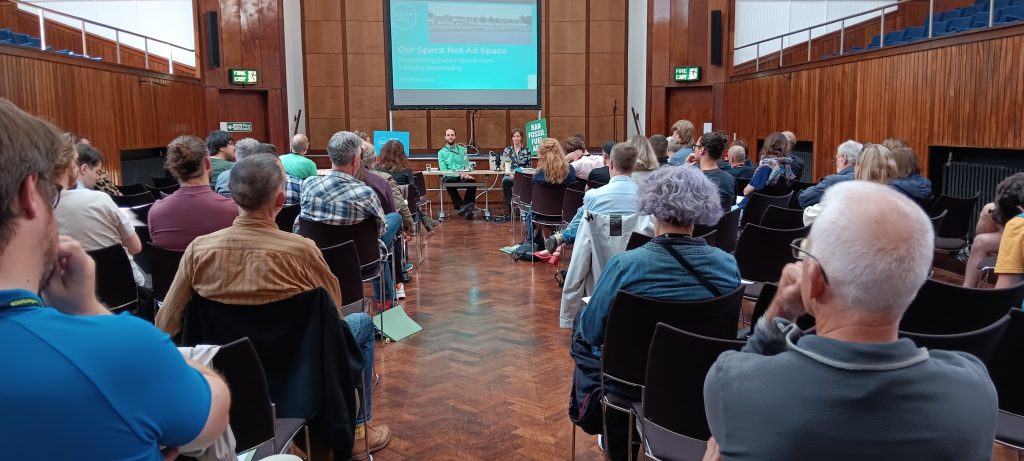
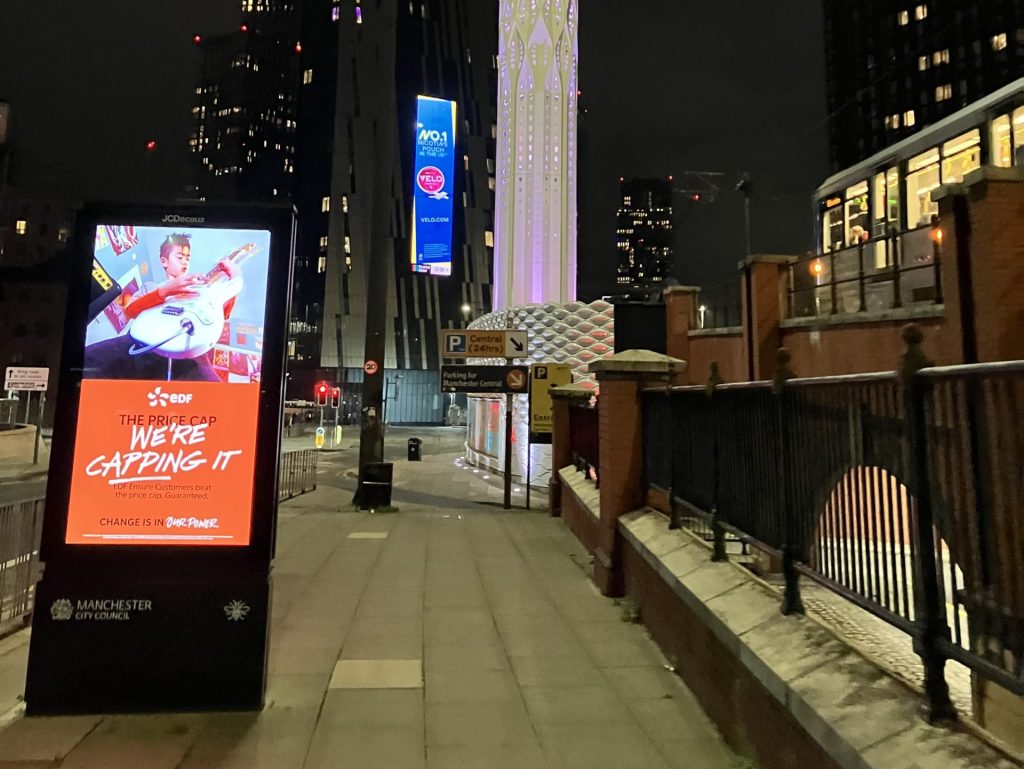
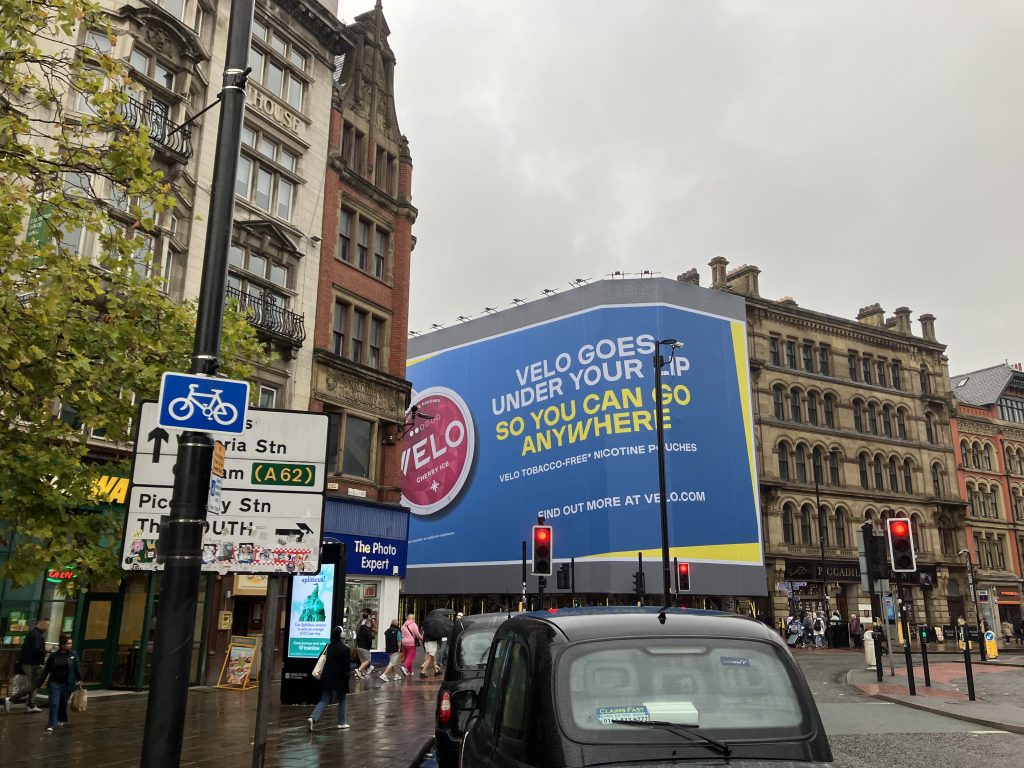
Adfree Cities travelled to Manchester to host a panel at the Green Party Conference’s ‘fringe-fringe’ event, Hopeful Humanity. Our event, which was entitled ‘Our Space not Ad Space: reclaiming public space from harmful advertising’ covered the psychological damage of advertising, the limitations of the current regulating authority, and the ways that communities can fight back against it
Our panel was chaired by the brilliant Christina Coleman, Wealden District Councillor for Danehill and Fletching, sustainability consultant and environmental campaigner. Outreach Director Nicola Round and Big Oil Arts Organiser Chloe Naldrett spoke for Adfree Cities, and Peter Sims represented Green House Think Tank, of which he is the Chair.
We opened the panel by sharing the excellent film made for us by BROADEN Films for the Parliamentary launch of our Unavoidable Impact report earlier this year. The film demonstrates the outrageous extent to which our public space has been invaded by corporate media and we were delighted to have filmakers Bryony and George in the audience for the talk.
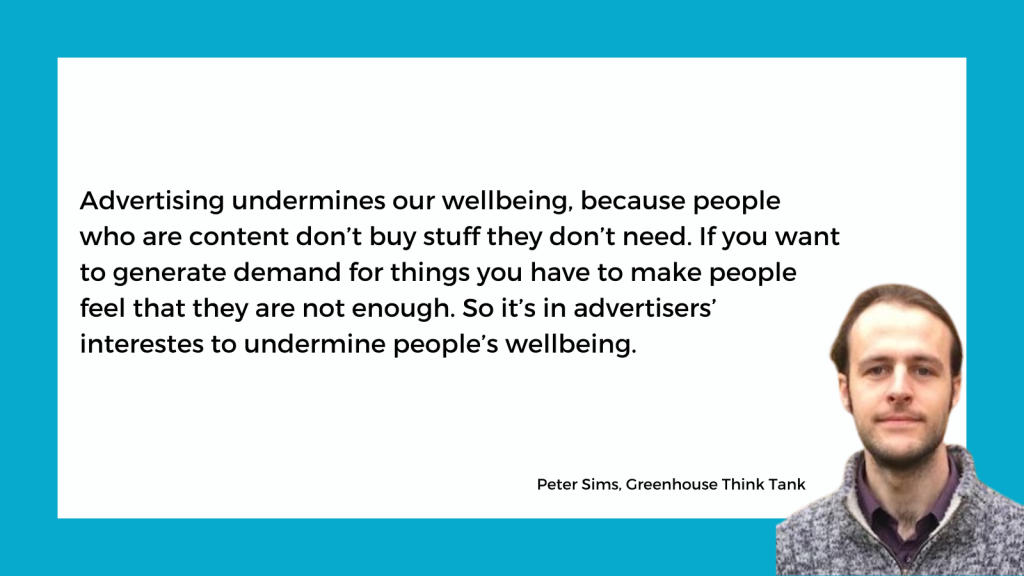
Peter opened the panel presentations with his work on the social impact of advertising. The ad industry often justifies itself by claiming that it shares vital information with the public, but advertising which was purely informative would look very different from the manipulative, coercive content that we have become used to seeing. Peter made the point that advertising is deliberately designed to make us feel inadequate or lacking, and while this is an effective tool to drive consumption it also drives poor mental health outcomes. We can’t opt out of outdoor advertising, which means we can’t protect ourselves from this risk.
No ads, trees please
Chloe spoke about the ad watchdog, the ASA, and its responsibility to regulate the ad industry, referencing the impact that Adfree Cities is having on the ASA’s greenwash guidance as a result of the complaints made about ads by companies like Toyota, HSBC and Shell over recent years. She shared the Shell ads which are currently being investigated by the ASA, and pointed out that with a regulator that is unable (or unwilling) to get to grips with unscrupulous and misleading practice from companies and ad agencies, a national high carbon ad ban is necessary.
Nicola spoke about Adfree Cities’ research into the intersection between outdoor advertising and existing social inequalities, which has been used as key data by the councils who have now banned high-carbon and unhealthy ads on the outdoor sites under their control. She brought in Councillor Marieanne Elliot to talk about the process Sheffield Council went through with their ad ban, and how they’d balanced the financial loss against the public health gain. Nicola also spoke about the Adblock network across the country, showcasing the work of local groups including the Burg Arts board in Bristol and the Black Friday billboard cover-up in Reading last year.
The session concluded with questions from the floor. There is so much interest from people seeking advice on how to defend their local streets from new digital billboards, and councillors looking to begin conversations about an ad ban. Our audience suggested that trees, art and green walls would all be much better uses of our public spaces than advertising.
Joining the dots
On Sunday, we held a session for the Association of Green Councillors where we were able to hold more informal and detailed conversations with around 15 councillors. We shared our research and helped them consider ways of engaging with their peers either alone or collectively across a group of regional councils to deploy existing planning mechanisms and resist harmful advertising where they can.
Conference itself was energised by the Green’s historic gains in Parliament: there was a confidence from members that the increased visibility of Green politicians at a national level and the increased popularity of Green policies at a local level would see them drive real change.
It was fantastic to be part of the conversation and to join the dots between the many problems which can be helped by removing public advertising, from intensively farmed meat, to single use plastics, to airport expansion.
What’s next?
Next up, Adfree Cities is off to Liverpool for the Labour Party Conference on September 23. We’ll be hosting a free, public talk on “Taking demand reduction seriously”, in which we will explore the policies needed to rein in demand for high carbon products and lifestlyes in order to deliver a just transition.

Published by