
Given the harms caused by gambling, and the risk of children becoming addicted, why is gambling advertising such a Wild West? Adfree Cities’s Charlotte Gage has been finding out why regulation isn’t working, and why a comprehensive ban on gambling ads could be the answer.
In September 2024 I attended the Peers for Gambling Reform summit on gambling advertising. We heard from MPs and Lords, academics, journalists, campaigners, and those with lived experience of gambling harms, including homelessness, bankruptcy and suicide. The general feeling was that we need national legislation for a universal content ban on all gambling advertising.
Nobody can hide from outdoor ads
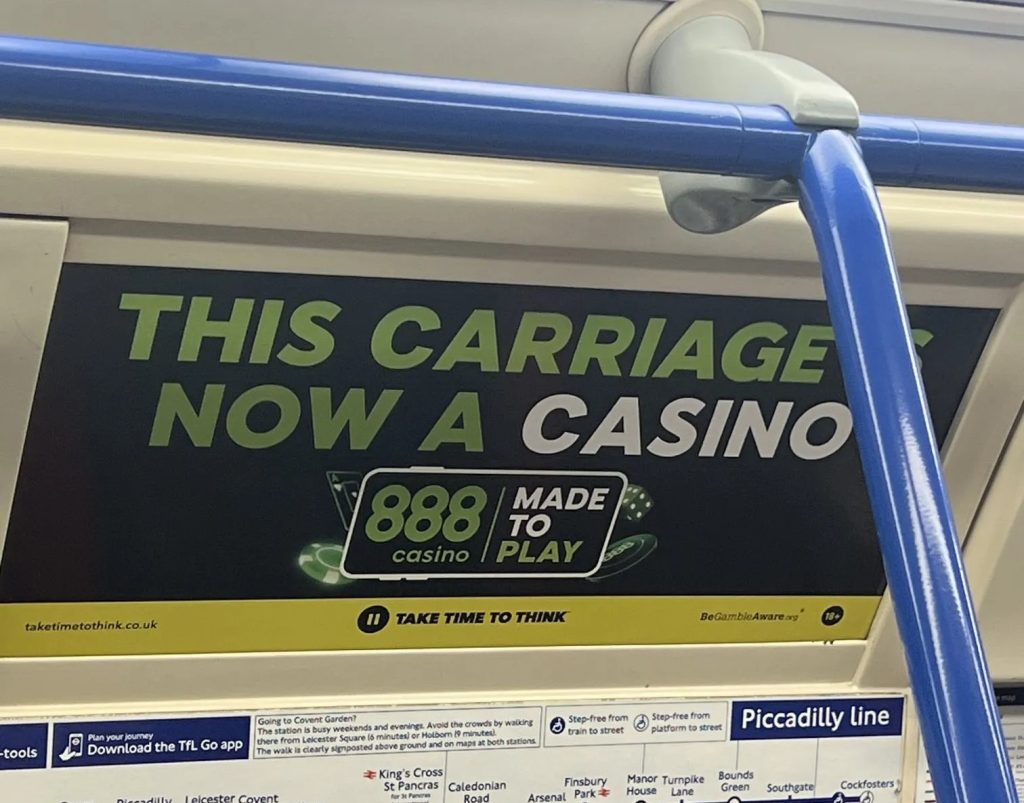
However, although there was a lot of talk about online ads; content marketing; logos on sports kits and advertising in sports; and being constantly bombarded by gambling ads – outdoor advertising was not mentioned. We know that gambling ads are seen on our streets and public transport networks – in fact we submitted a joint complaint to the ad regulator about ads which claimed to turn public spaces into casinos which led to some of the ads being removed – and that these can be seen by anyone, including children or people directly impacted by gambling harms and addiction.
At the summit the Gambling Commission, the UK’s public gambling regulatory body, claimed that its focus is to stop harm to children and young people, and the Advertising Standards Authority (ASA) highlighted their rules on not targeting ads at under 18s or in areas where 25% are under 18. However, as under-18s can’t gamble legally, it’s hard to understand why it should be permitted before the watershed on TV or outdoors at all. A recent poll from the Coalition to End Gambling Ads (CEGA) found that 78% of the British public don’t think anyone under 18 should be exposed to gambling ads. Yet this cannot be regulated if ads for gambling continue to be in our public spaces.
We also know that many councils are concerned about gambling advertising and its impact on public health, and more than 79% have included a restriction on gambling ads in their Advertising and Sponsorship Policies with pressure on TfL to also bring this in. However, this only covers the ad sites that councils control, so gambling ads could still be seen on other billboards, digital screens and transport networks in local areas.
Gambling harms
The gambling ad industry is worth $540 billion worldwide and £1.5 billion per year is spent on gambling ads in the UK. But the industry can only make money from advertising by increasing participation and convincing people into believing that they will win.
The harms caused by gambling are well documented and unimaginable for individuals and their families. Yet despite this – and despite widespread recognition that tobaccos ads cause harm by promoting a harmful product – it seems that the government doesn’t consider that there is enough evidence to show a causal link between gambling ads and harm in order to regulate them. This is a public health crisis which is being ignored.
Ending gambling advertising and promotion would not mean an end to gambling. But banning the ads would stop gambling being so normalised, it would prevent gambling being promoted to children, and it would mean those people who are already experiencing addiction could listen to the radio, watch TV, go to the cinema or sports matches, and walk along the street without constantly seeing gambling ads. And, hopefully, it would save lives.
Listen below to our podcast episode exploring regulation of gambling advertising.
From regulation to legislation
There was a clear message that there needs to be a move from regulation to legislation as the current regulatory framework is not working: self-regulatory practices by the gambling industry, such as GambleAware, are not reducing the harms caused. In Europe, countries such as Italy, Germany, Belgium and the Netherlands have banned all gambling ads – the key difference is they don’t even talk about the need for evidence of ads causing harm, this is clearly understood. The other difference is that the gambling industry is not involved in regulation.
The 2005 Gambling Act includes an understanding of the impact of adverts but unfortunately has actually made advertising easier and there has been an increase in ads since it was introduced. It also outlines how the Secretary of State, currently Baroness Twycross, can enact any powers they see fit – this could include a national gambling ad ban. Sadly gambling advertising is not even mentioned in the most recent White Paper on Gambling Reform.
In the case of tobacco ads we all accept the argument that marketing leads to consumption, which leads to harm. The same argument is now recognised to apply in the case of junk food ads. How much longer can policymakers continue to deny the same logic in the case of gambling ads? As Will Prochaska from CEGA said “There is no such thing as a responsible gambling ad.”

Published by