
Guest blog by Prusha one of Bite Back‘s youth activists who is determined to fight for a future where healthy food is accessible and affordable for all.
Walk down any high street, wait at a bus stop, or stroll past a billboard, chances are you’re not seeing healthy food being promoted. You’re seeing a marketing machine designed to push high-fat, salt or sugar (HFSS) products into the hands of young people like me.
I still remember walking to school one morning, half-awake and clutching my water bottle, when a massive poster of the new McDonald’s wrap flashed up. Five steps later, there was another one, this time advertising chips and a milkshake. By the time I got to school, I felt like I’d seen more fast food ads than actual food options in our canteen. It felt like the streets were deciding for me, not my own hunger or health, just what the adverts had already planted in my mind. Isn’t it weird how Big Food follows us everywhere?
As a youth activist with Bite Back, I’ve seen how powerful and dangerous advertising can be. Bite Back are on a mission to change the way unhealthy food is made, marketed and sold, especially to children. Everyone — especially young people — deserves to live in a world where Big Food businesses are held to account for their impact on our health, and where the Government leads the way in building a healthier environment for future generations.
Our reality
In previous research, Bite Back surveyed young people aged 13-19, and one in three said a junk food advert would encourage them to buy the product at the next opportunity.
We have made progress in stopping the endless flow of junk food ads. 1st October 2025 will mark a huge milestone, when the long-awaited restrictions on the advertising of less healthy food and drink, on TV before 9 pm and online at any time, come into effect.
But we’re still not fully free from predatory marketing tactics — we’re surrounded by junk food adverts the moment we step outside, too.
Our campaign: give kids a #CommercialBreak
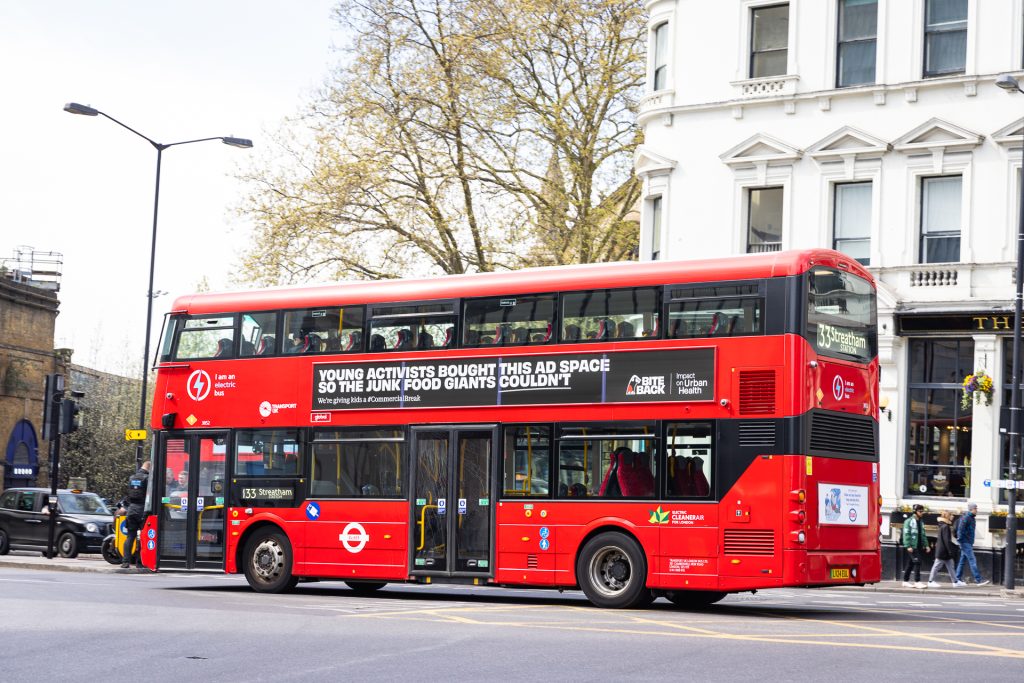
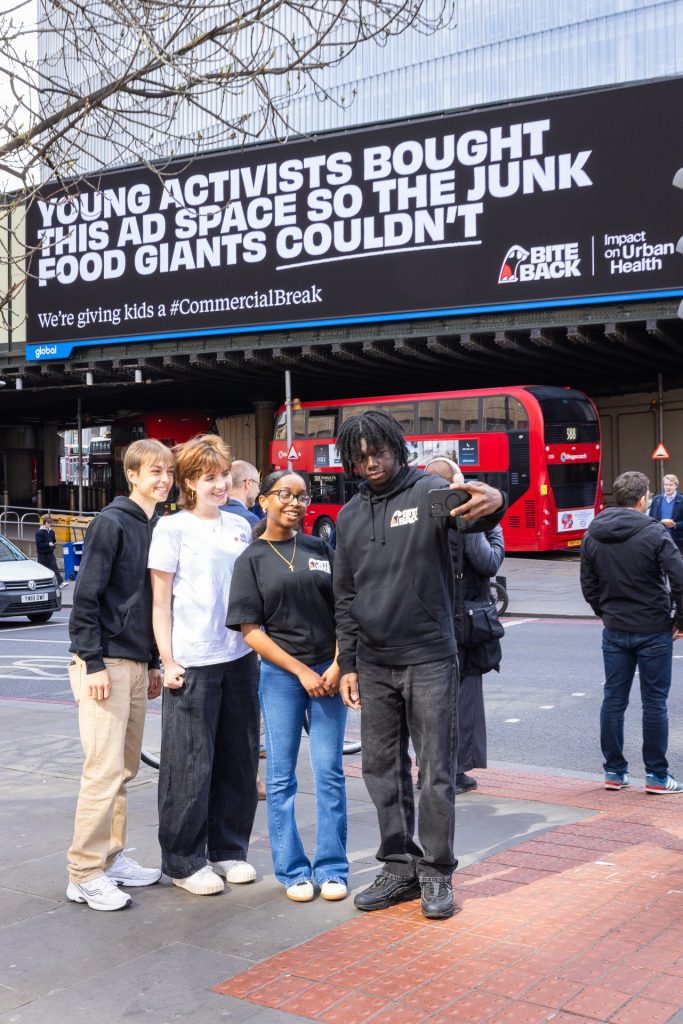
That’s why we took over ad spaces in London, from billboards to the sides of buses, we put our own message in 365 places: give kids a #CommercialBreak. And we’ve got the facts to back our message up — our analysis found that last year (2024), food and drink companies spent over £400 million on street advertising. So we’re using Big Food’s tactics against them.
And we’ve got the stats to back our message up. In collaboration with the University of Liverpool, we explored the extent of unhealthy outdoor advertising in four Local Authorities across the country: Southwark (London), Newcastle, Birmingham, and Liverpool.
And here’s what we found…
The majority (57%) of ads featuring food and drink were for HFSS products. I know how this feels: in my hometown I face a tidal wave of marketing promoting sugary drinks, ultra-processed snacks and fast food sweeping my area. And when more than one in three 10/11-year-olds are at risk of future food-related ill health, this isn’t right.
But it’s not only unhealthy, it’s also unfair…
Our research found that the most underserved areas were six times more likely to be targeted by unhealthy advertising when compared to the most affluent areas. And in areas without healthier advertising policies, 62% of food and drink ads featured at least one unhealthy product. That’s not just a coincidence, it’s a business model. The ads that Big Food plaster our streets with aren’t just unhealthy, they’re also unfair.
And who’s leading the charge? One name came up more than any other. McDonald’s. It was the most frequent advertiser, making up 31% of all food and drinks ads we found. Almost every single one of their adverts (97%) featured at least one unhealthy product. What’s even more concerning is where they were placed. On average, McDonald’s ads appeared nine times more often in the most deprived areas compared to the least.
And it doesn’t stop there.
Big Food isn’t just on billboards and buses, it’s showing up in places where they know young people will be. A shocking one in three schools we looked at had at least one unhealthy food ad within walking distance of their gates. That means young people are seeing this kind of marketing every single day. Whether we’re walking to school, waiting at a bus stop, or just hanging out with friends, it’s always there, in the background, shaping our choices. These ads aren’t just photos of burgers or chocolate, they’re bright, flashy campaigns designed to grab our attention and keep it — often featuring a price promotion. It’s background noise we might think we can ignore, but it’s influencing us more than we realise. This isn’t random, it’s targeted.
The change we need
Some places are trying to fight back, and put us all on equal ground. In London, the Mayor’s Healthier Food Advertising Policy has led to a noticeable drop in unhealthy ads across the city. Local action helps, but it’s not enough on its own, because councils don’t have control over private advertising in their local area. In Southwark, which has a local policy, our research found that unhealthy products still made up 38% of all food advertising.
We need national change. The Government has the power to make real progress, but it’s still putting corporate profits before our health. It’s time it stepped up and expanded restrictions on junk food advertising across all public spaces. Young people deserve better.
Because once you start seeing it, you can’t unsee it, and once you understand how deep it runs, you realise it’s not just about food, it’s about fairness. And that’s something worth fighting for.
How you can Bite Back
Want to take action? Start by noticing the ads around you, what are they promoting and who are they targeting? Speak up about what you see, whether it’s to your local council, writing a letter to your MP or share our campaigns on social media.
Because this isn’t just about what we eat, it’s about what we’re surrounded by, what we’re taught to crave and the choices we’re being encouraged to make. We deserve better. We deserve a world where health isn’t a luxury and junk food ads aren’t the wallpaper of our lives.
This isn’t about silencing ads. It’s about making sure our voices are louder. Streets filled with junk food ads send one message. We’re here to send another: we won’t stand while our health is sold to the highest bidder.
The system needs fixing — and we’re not waiting around for permission to fix it.

Published by