
What comes to mind when you think about Slovenia? Perhaps snow-topped mountains, clear blue lakes, dragons and castles. As well as all these wonders, and a thriving arts scene, Slovenia is home to a small but mighty environmental organisation called Umanotera, who have been uncovering the harmful impacts of consumerism and corporate power for three decades. They are not afraid to ask challenging questions, and their latest project seeks to challenge unhealthy and unsustainable food advertising.
We were pleased to contribute to a lively event in Ljubljana last month, “Advertising on the Grill: how can we stop the promotion of harmful foods?” and to learn more about the similarities between advertising in Slovenia and here in the UK.
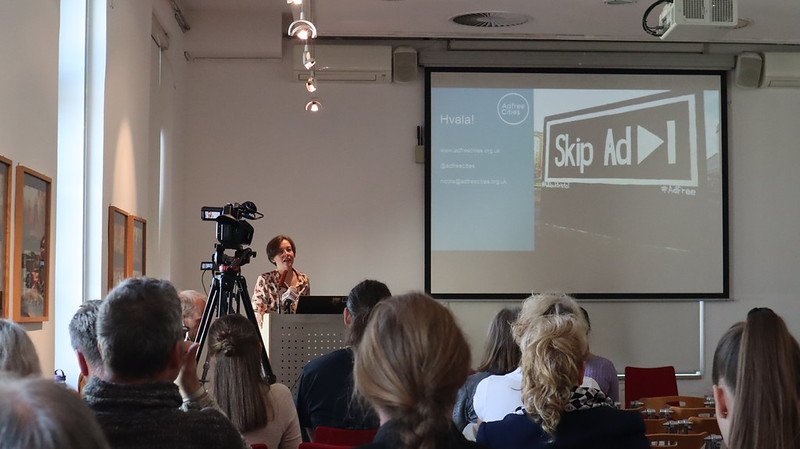
Food system change
Umanotera is confronting the urgency of transforming the food system, underlining the damage to climate and health caused by the overconsumption of animal-based and unhealthy foods – and, the threat to food production itself from a changing climate caused by these industries. They recognise that advertising is a major force behind these threats and are looking for real solutions along with their partner, the Slovenian Consumers Association, who want to understand and break the link between advertising and poor health, particularly in children.
Our food choices are, much more than we realise, a reflection of the food environment that guides our choices and reduces our independence in decision-making. Advertising plays a key role in what food we buy and eat… Advertising encourages us to consume unhealthy food in excess—not just one burger, but a triple burger; not just a piece of meat, but a bucket of meat.
– Renata Karba, Umanotera (speaking at the Umanotera event in October 2025)
The Slovenian government promotes meat and dairy through a marketing campaign reminiscent of the UK’s irresponsible “Let’s Eat Balanced” campaign, promoting the health benefits of these foods. In both countries, much-needed public health messages encouraging us to consume beans and vegetables are sadly nowhere to be seen – which must be, at least in part, because the horticulture sector has much less financial and political power. The Slovenia marketing campaign does feature some fruit, at least.
Health impacts and inequality
If you take a bus out of the city you see huge ads on the side of high-rise residential buildings, suggesting that (as in the UK), lower income neighbourhoods are seen as a fair target for more commercial advertising, rather than wealthier areas. This is a problem, because as stated in the latest EAT-Lancet Commission report, poorer communities are disproportionately affected by unhealthy food advertising and its health impacts.
These are huge challenges, but also huge opportunities for change. The highways and streets of Ljubljana, like UK cities, are lined with adverts for KFC, McDonald’s, and supermarket meat and dairy products. Restricting this advertising would likely have a significant impact on health (as evidenced by the positive impact of the Transport for London ban on unhealthy food advertising since 2019).
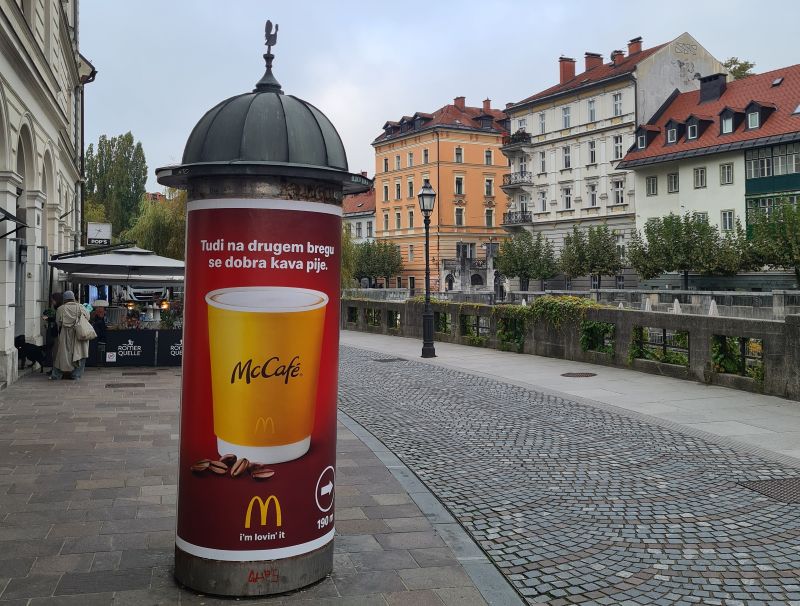
Taking action against harmful advertising
Local ad bans are possible too, as we are seeing in Haarlem in the Netherlands where a ban on meat advertising is due to come into force in early 2026. Many UK councils have introduced bans on the advertising of unhealthy food, and some have moved to ban polluting products including cars and airlines too. These councils are pushing back on the assumption that has benefitted big brands for too long: that they should have the freedom to advertise despite the harms caused by manufacturing demand for their products.
Local – and ultimately, national – bans on harmful advertising, including meat and ultra-processed food, are what we should now aim for and expect, if governments want to be taken seriously on climate and health.
The task may seem like David’s fight against Goliath, as neither the producers of harmful foods, nor retailers, nor advertising companies are willing to give up their “freedom”, nor does the state want to deal with this issue. However, we know that it is feasible, as in the past it has been possible to legally restrict the advertising of tobacco and alcohol, which was also opposed by economically powerful and influential lobby groups.
– Renata Karba, Umanotera
Regulation reform is also on the menu in Slovenia, with the Slovenian Advertising Chamber and an ad industry representative both accepting the need for regulation of harmful food advertising, at the Umanotera event last month.
We spoke to several journalists from print, TV and radio while in Slovenia, and they were all keen to understand the impact not just of harmful food advertising, but of advertising in public space more widely. We were happy to share our vision for happier, healther cities free from advertising, and you can see or hear the various national press articles and interviews on our media page.

Published by