
A new study has found a correlation between billboard advertising and liver disease. In the study, led by St James’s University Hospital, Leeds, researchers found a correlation between the placement of advertising billboards promoting alcohol and unhealthy food with hospital admissions for liver disease.
- Ward et al., 2026, Areas With High Prevalence of Liver Disease Have More Advertisements for Alcohol and Unhealthy Food, Clinical Gastroenterology and Hepatology. doi.org/10.1016/j.cgh.2026.04.007
According to the new research, patients admitted to hospital with serious liver disease were overrepresented in areas with higher total numbers of adverts, higher numbers of adverts for alcohol, and higher numbers of adverts for unhealthy food. Billboards promoting unhealthy food and alcohol were common in Leeds, and clustered in neighbourhoods with greater social deprivation.
Of the 1295 roadside ads surveyed, 5.7% were for alcohol, and 36% for unhealthy food. This is consistent with a previous study in Liverpool, led by the University of Liverpool with campaign group Bite Back, which found that 50% of outdoor ads were for junk food.
Alcohol and obesity are major risk factors for liver disease, which in many cases can be prevented by healthy lifestyle changes. Advertisements for alcohol and junk food increase consumption of these products: attention to alcohol adverts increases cravings and consumption, while children eat significantly more calories in a day after watching just five minutes of junk food advertising (including ads which only showed brands).
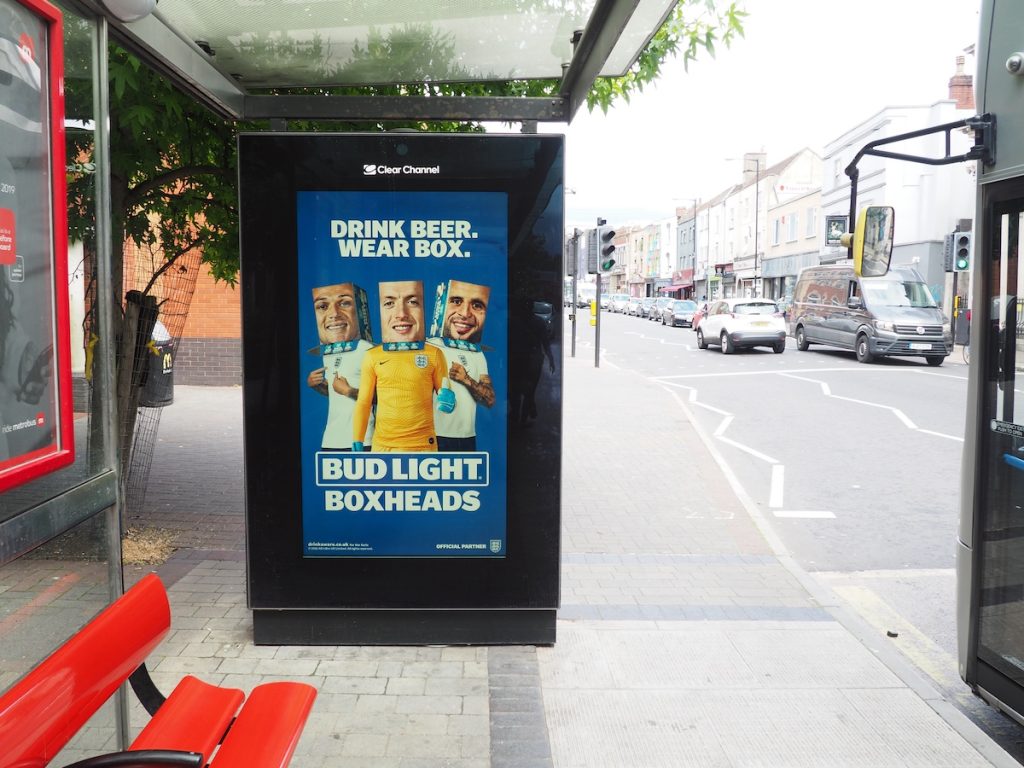
In Adfree Cities’ research into billboard placement and inequalities, Unavoidable Impact, we found that four out of five billboards were placed in the poorest half of England and Wales. With the majority of outdoor advertising being for unhealthy products, the location of these ad sites risks compounding existing health inequalities.
The researchers of the new study note that advertising is “a ubiquitous part of the urban landscape”, and that restricting unhealthy adverts “may represent a rapid means to quickly alter the built environment to the benefit of people with SLD [Severe Liver Disease]” as well as wider health benefits.
The study cannot account for other risk factors, such as higher rates of air pollution and lower access to green space for those living nearer to busy roads, which is often where advertising is placed.
What this study demonstrates is that outdoor advertising is not a neutral presence on our streets. Rather, advertising in public space has a powerful influence over choices that affect our health and wellbeing. Local authorities across the UK, including Sheffield, Portsmouth and Cardiff are taking action to restrict harmful advertising in public space. Could yours be next?


Published by