
It’s a truth universally acknowledged that stopping new billboards going up is easier than taking existing ones down.
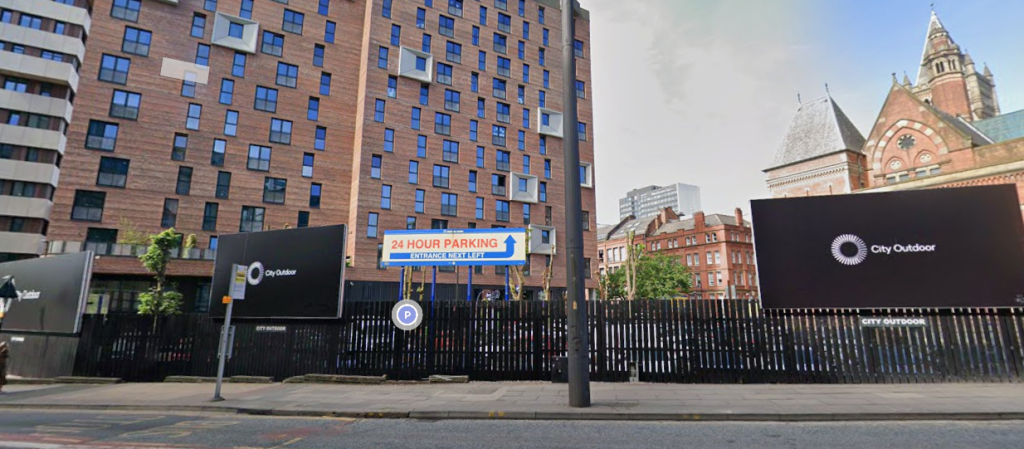
And yet, that’s exactly what will soon happen to three digital billboards on Aytoun Street in Manchester. That’s because Manchester City Council have issued a discontinuance notice against the billboards. What that means is that the council have essentially removed planning permission for the billboards, and ordered the billboards’ owners – City Outdoor Media – to take them down.
Discontinuance notices are like gold dust. Councils are very reluctant to issue them as the owner of the billboard will likely challenge it in court, racking up costs for the council. Indeed, that’s exactly what happened in Manchester.
City Outdoor Media first appealed the discontinuance notice, prompting a review by the planning inspectorate, who sided with the council and upheld the discontinuance notice.
However, City Outdoor Media went further and successfully obtained a judicial review of the planning inspector’s decision in the High Court. If they had won this review, the discontinuance notice would be overturned and the council liable to pay City Outdoor Media’s costs.
We are very pleased to say that City Outdoor Media in fact dropped their case before it went to court, meaning that the discontinuance notice stands and the billboards will be removed. With one billboard 12 metres wide by 3 metres tall, and the others 6 metres wide by 3 metres tall, that’s a lot of ad space removed!
Why did City Outdoor Media appeal?
The grounds on which City Outdoor Media appealed the discontinuance notice and ultimately sought a judicial review included
- That the planning Inspector failed to properly assess whether the displays, either together or individually, caused substantial injury to amenity, failed to give adequate reasons, and / or was irrational
- That the planning Inspector erred in his approach to heritage impact
- That the discontinuance notice was an unlawful violation of City Outdoor Media’s rights under Article 1 of the European Convention on Human Rights
All of these are interesting to see, and had the case proceeded to court would have set useful caselaw for future instances.
Amenity
As we often note, outdoor ads can only be refused planning permission on two narrow grounds: road safety and amenity. The latter is a vague measure of how attractive an area is. So, areas of towns and cities deemed more attractive tend to have fewer ads, whilst areas deemed less attractive have more.
We have always criticised this approach as it leaves decisions about “attractiveness” in the hands of outdoor advertising companies and council planning officers, and ignores the opinions of the people who actually live in the area. Further, it is a circular argument, as putting up billboards lowers the amenity of an area, therefore making it more likely that more billboards will go up in the future.
The right to advertise?
City Outdoor Media tried to argue that the discontinuance notice was a violation of their rights under the ECHR, which enshrines the right to freedom of expression.
As Green peer Natalie Bennett has pointed out, there is no right to advertise. Or, as noted in the Report of the Special Rapporteur in the field of cultural rights, outdoor advertising “pose[s] significant challenges to the realisation of the right to participate in cultural life and to the protection of public spaces reflecting cultural Diversity”.
When The Hague in The Netherlands passed its world-first local law banning high carbon adverts back in September 2024, a group of industries challenged it in court, also using freedom of expression arguments to try and quash the ban.
However, in that case the court determined that the ban does not limit the freedom of expression of any affected company – i.e. one prohibited from advertising – since the ban is a) targeted to outdoor ad spaces, and b) proportionate to the goal of reducing emissions and pollution.
What happens next?
We are glad that the case against Manchester City Council has been dropped and the discontinuance notice upheld. This whole case was an example of corporate bullying in which well-resourced companies threaten legal action in the hope of overturning due process in their favour.
It is concerning to see an outdoor advertising company attempt to use human rights as grounds for a legal challenge. As the advertising industry more generally comes under increasing scrutiny for its role in promoting unhealthy and polluting products, we can expect them to become more aggressive in their self-defence.
It is worrying that at the same time the government is proposing to weaken planning policy by removing a crucial paragraph from the National Planning Policy Framework, which provides details on how planning law should be implemented in practice, including by local councils.

Published by