
This guest blog was written by Molly Stebbing, a student at the University of Bristol.
Recent high-profile events such as Eurovision, the Chelsea Flower Show and the FIFA World Cup highlight the jarring disconnect between the intrinsic values – like connection and community – promoted by cultural events and the harmful realities of capitalist consumerism being promoted to us through sponsorship.
But the wave of harmful sponsorships is prompting a backlash. With fossil fuels are having their ‘tobacco moment’, it’s time for popular cultural events to drop polluting sponsors. Read on to find out more and about how you can take action today.
Eurovision
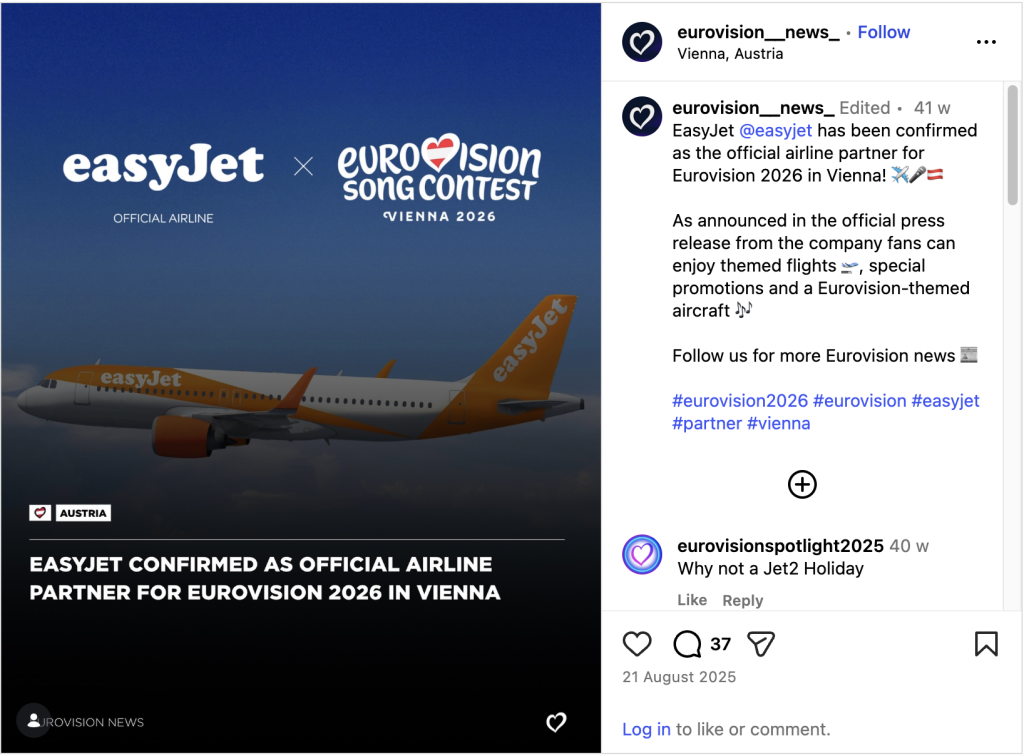
The 2026 Eurovision Song Contest final aired on 16 May, with corporate sponsors including EasyJet and Moroccanoil. In honour of the event, a specially chartered Eurovision party flight on an EasyJet plane was promoted on social media as a ‘slay in the sky’, whilst on their website the airline proudly proclaimed their commitment to ‘flying fans, feather boas and false lashes’ across Europe.
As the largest music competition in the world, Eurovision has long been culturally iconic, celebrating music, diversity and purportedly unity. Additionally, Eurovision has a long history of association with the LGBTQ+ community. The global audiences and cultural significance of the event have historically served to provide ample opportunity for states and sponsors to bolster their image.
Entrenched in widespread controversy over the decision to allow the participation of Israel, Eurovision 2026 experienced mass boycotts. This included 5 countries abstaining from participation in objection to the competition’s role in reputation laundering for Israel, encouraging normalisation of genocide, and pinkwashing through the alignment of the state with a longstanding LGBTQ+ cultural highlight. This year more than ever emphasised the moral conflict of sponsorship of high profile event like Eurovision: violent states and polluting corporations should not be upheld as champions of queer rights and unity, and sponsorships like these undermine the messaging of the events. The consequence of this contradiction is hefty, with floundering viewership and an uncertain future for Eurovision.
Chelsea Flower Show
Next on the May TV schedule was the Chelsea Flower Show. If you were watching, you likely saw promotion of the Show’s headline sponsor Range Rover. Range Rover utilised sponsorship to help launch its new electric vehicle, the Range Rover Electric. The SUV was presented to viewers nestled within the heart of the specially curated inaugural ‘Range Rover Cloister’, a garden featuring idyllic scenes of sculptured columns, reflective water features and ‘delicate pollinator-friendly planting’.
Chelsea is an iconic celebration of British horticulture, deeply associated with the appreciation and protection of nature. The event is also the RHS’s largest annual fundraiser, enabling the charity to pursue its stated aims of encouraging wide engagement with gardening and addressing issues such as biodiversity and climate change.
By partnering with the RHS, organisations like Range Rover, owned by Jaguar Land Rover (JLR), become part of a community dedicated to “promoting environmental sustainability and preserving Britain’s rich horticultural heritage”. JLR’s commitment to environmentalism and pollinator-friendly planting may seem surprising, with Range Rovers among the top selling vehicles with the highest carbon emissions, and JLR’s recent lobbying for the delays in the enforcement of the ZEV mandate, which by 2035 will require 100% of new vehicles sold by manufacturers to be EVs. This presents a clear example of the use of greenwashing as a tool of social license.

Image credit: Jaguar Land Rover (URI)
FIFA World Cup
Another upcoming goldmine of corporate sponsorship, the 2026 FIFA World Cup, will kick off from the 11th June, sponsored by major brands such as Saudi oil company Aramco, CocaCola and Qatar Airways. This year’s World Cup is set to be the most polluting of all time, and with corporate sponsors like oil giant Aramco the tournament will be a billboard for the world’s largest polluters.
The sponsorship of FIFA poses a lucrative opportunity for these corporations to align themselves with the cultural values promoted by sport such as health and athleticism, despite the obvious negative health impacts of highly sugary drinks and polluted environments. Parallels can be drawn to the long history of tobacco sponsorship in sports, where the sponsorship of high-visibility sports events was widely utilised by tobacco companies as a highly effective way of increasing smoking uptake, particularly amongst young people. A WHO ban on all tobacco advertising and sponsorship came into effect in 2005, and FIFA has since updated its policy to include a ban on smoking during its competitions.
The new tobacco?
In the footsteps of tobacco’s divorce from sports, should popular events now also drop high-carbon sponsorship deals?
Corporate sponsorship is a linchpin medium of corporate advertising, and an industry which is fast growing. Eurovision, Chelsea and FIFA are all key examples of how corporate sponsorship is used to cultivate the social licenses of brands, part of the pervasive efforts of corporations to sell the illusion that their brands can authentically reflect intrinsic societal values.
The cultivation of a social license enables a brand to gain the acceptance and trust of the general public, reinforces their omnipresence in society, bolsters their image and normalises their harmful practices. This illusion misleads us from the reality that our imbalanced economic system, based on extractivism and exploitation, is driving climate change.
A ban on fossil fuel advertising and sponsorship could see high carbon industries such as airlines banned from sponsoring these events. Write to your MP to call for a high carbon advertising and sponsorship ban; together we can end corporate sponsorship of our treasured cultural events.

Published by