
By Rowan Hanson-Iles
If you live anywhere remotely urban, you will have seen the explosion in popularity of murals and street art. Large mural commissions are now commonplace on our streets and artists compete for placements at dedicated street art festivals. A sudden spawning of murals on building hoardings can even be a precursor to unaffordable housing and the gentrification that follows.
But what about other visual expressions and other ways of repurposing and reclaiming public spaces? Interventions that people can interact with and that have other lasting benefits as well as bringing visual joy. Ways that can fight back against the architecture and infrastructure of urban planning that determines where we can walk, cycle and enjoy recreational activities. For example, challenging pseudo public spaces – full of anti-homeless street furnishings, that are governed by private security.
Our freedom of movement is often restricted in order to prioritise cars, barriers prevent people crossing the street at desired points and signage restricts play. Mostly the images we encounter on our streets are that of corporate advertising, a curated visual language designed to most effectively sell us products. Corporate elements of urban life can be restrictive, impractical and could be regarded as an infringement of our freedoms of choice and movement. We did not give our consent for them to be there!
Street art, in its many guises, and the other interventions highlighted below don’t conform to this narrative. They are juxtaposed against corporate and urban environments. From being in the presence of, to actively participating in, public art projects, people are able to repurpose space and to escape the aesthetics of advertisement ‘art’ that becomes just another part of the constant haze of images, messages, and the commodification of life.
Guerilla Gardening and Parklets
Guerrilla gardening is a movement that “takes unused or neglected private property (usually municipally owned land) and brings it back to the masses in an attempt to beautify and repurpose every square inch, while often incorporating fresh produce sources to those in need.” – Gardenstead. It can look like seemingly self seeded flowers on a roundabout or an unsolicited herb garden in a park.
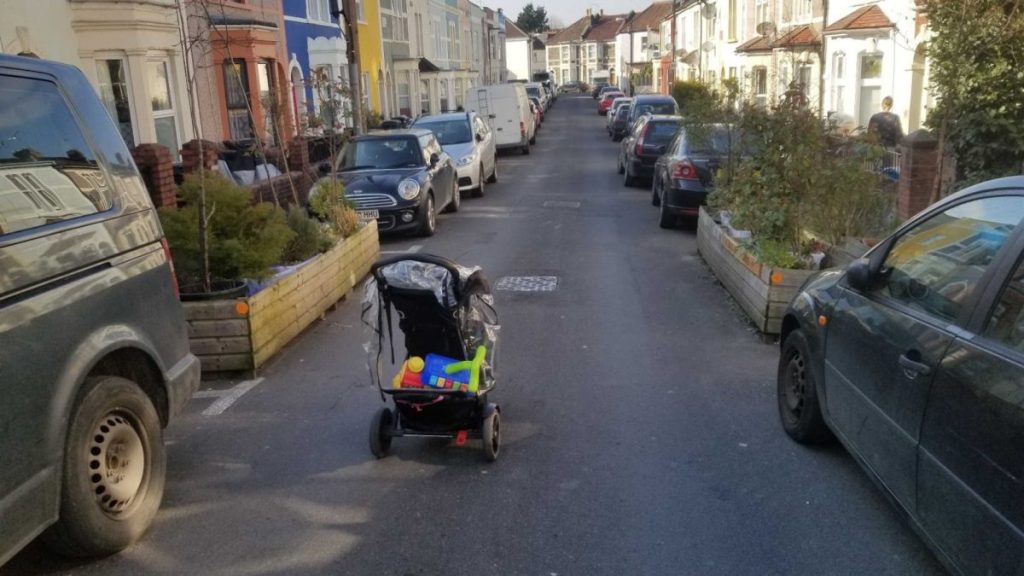
Parklets are a reclamation of street space with planters and benches to not only beautify the street but to reclaim space that is typically used for cars. If your neighbor is allowed to take up ten square meters to park their SUV, then why shouldn’t you be able to turn it into a micro garden and a place to sit to enjoy the equivalent space?
These two interventions can overlap and incorporate elements of each other but guerilla gardening is typically not sanctioned, the more punk approach. Whereas parklets aim to be more semi-permanent, seeking authorisation from councils to have a lasting impact. However this ‘legitimate’ approach takes time, resources and funding. Both practices not only look great but have other practical uses like food growing, combining street furniture for respite, and helping pollinators and birds. Pollinator Pathways of Bristol are a great example.
Yarn bombing
Forget paint! Street art can be achieved with any medium you desire. Yarn bombing is the practice of knitting on or around things in public spaces. Just like traditional graffiti, yarn bombing can be done with or without permission. Though you’re unlikely to get in trouble for using your spare squares giving a tree a wooly scarf.
Yarn bombing can be for people who don’t want to tag traditionally but still want to get a kick out of subjecting people to their creations. Yarn bombing can be created in the same circumstances as illegal graffiti but is a lot more impermanent, and mostly easily removable, leaving no damage. Yarn bomber, Olek, is famous for some high profile stunts.
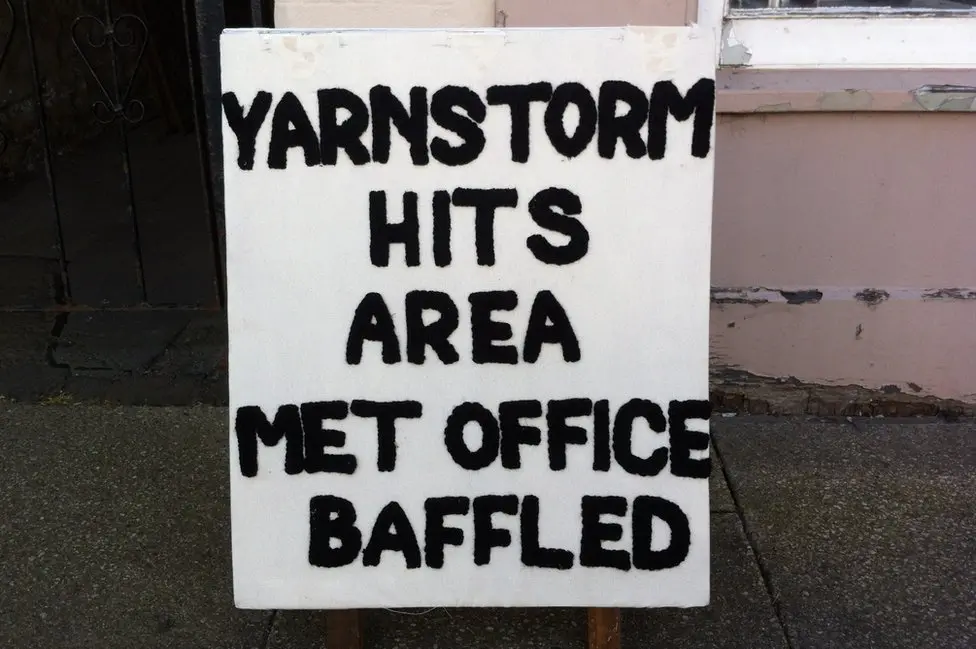
Image credit: BBC – Boarders Yarn Bombers
DIY skateparks
When there’s a lack of skateparks to shred, build your own! In Bristol there are two major DIY skatespots, M32 DIY and Curbside. Both have come about through grassroots action with little to no funding, mostly supported through donations and volunteering. Both sites have strong communities and encourage progression for users and offer a rewarding social aspect for many. The sites also host some quality graffiti, art markets and sometimes even host punk gigs and parties filling what would be dingy no go zones with dancing, community and expression. In London, see Southbank Skate Space.
Filling the cracks (Flacking)
There are street artists whose whole practice revolves around filling in cracks and crevices in pavements and walls. Repairing and highlighting the trauma and stresses that our streets and buildings are put through by years of use and neglect. Think of the Japanese practice of Kintsugi, where broken china is fixed with gold, and then replace the china with cracking pavements and the precious metal with Lego and mosaics.
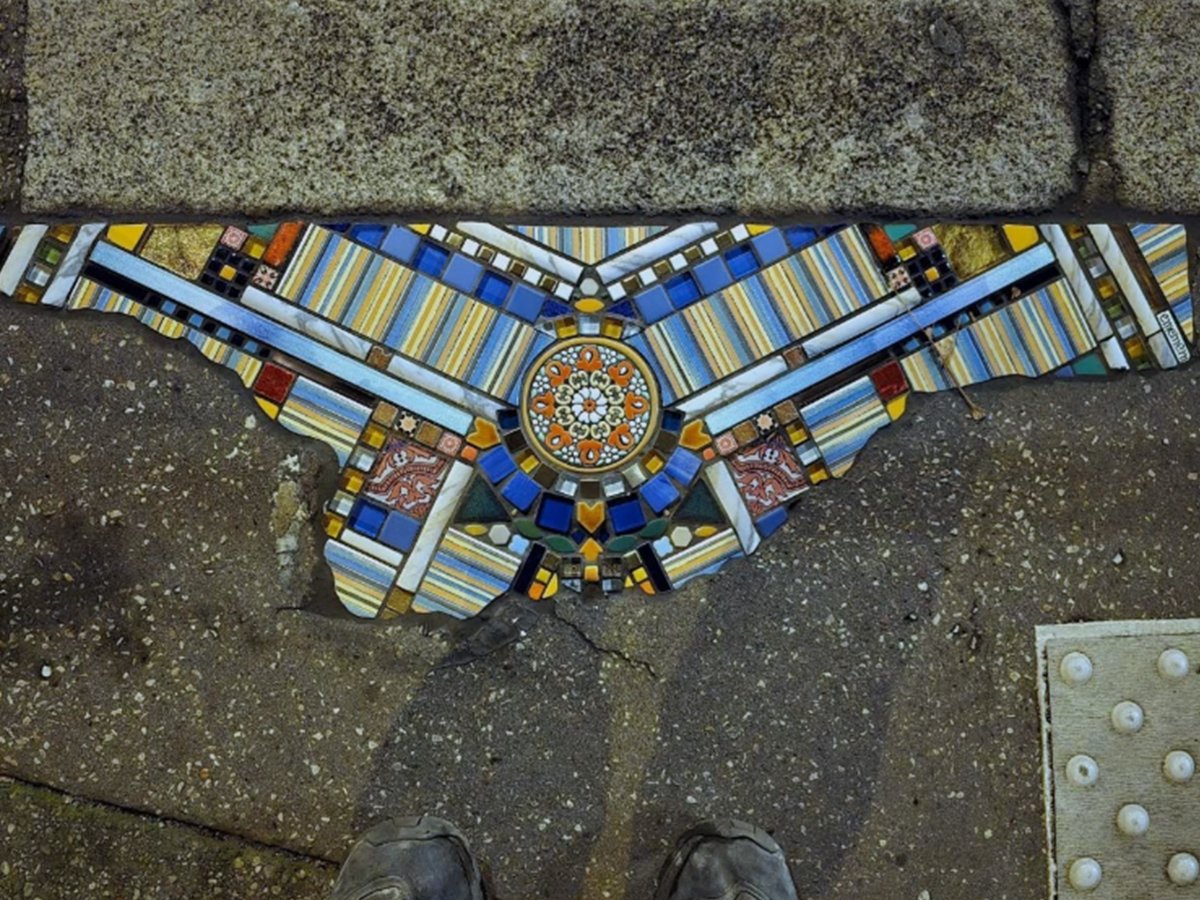
Picture Credit – Mosaic Artist Ememem
Community Arts
The Adblock Bristol community arts board in St Werburgs, is an example of how to use a mechanism of advertising to promote community messages by commandeering an abandoned billboard. The Adblock Bristol team coordinates local artists to share their artwork with the community and invites people to join in and learn how to paste a billboard.
By providing a positive alternative to corporate advertising, the Burg Arts project is part of the wider community campaign against the 8 corporate advertising billboards in the area that are often promoting fast cars, junk food and multinational chain stores.” – Adblock Bristol
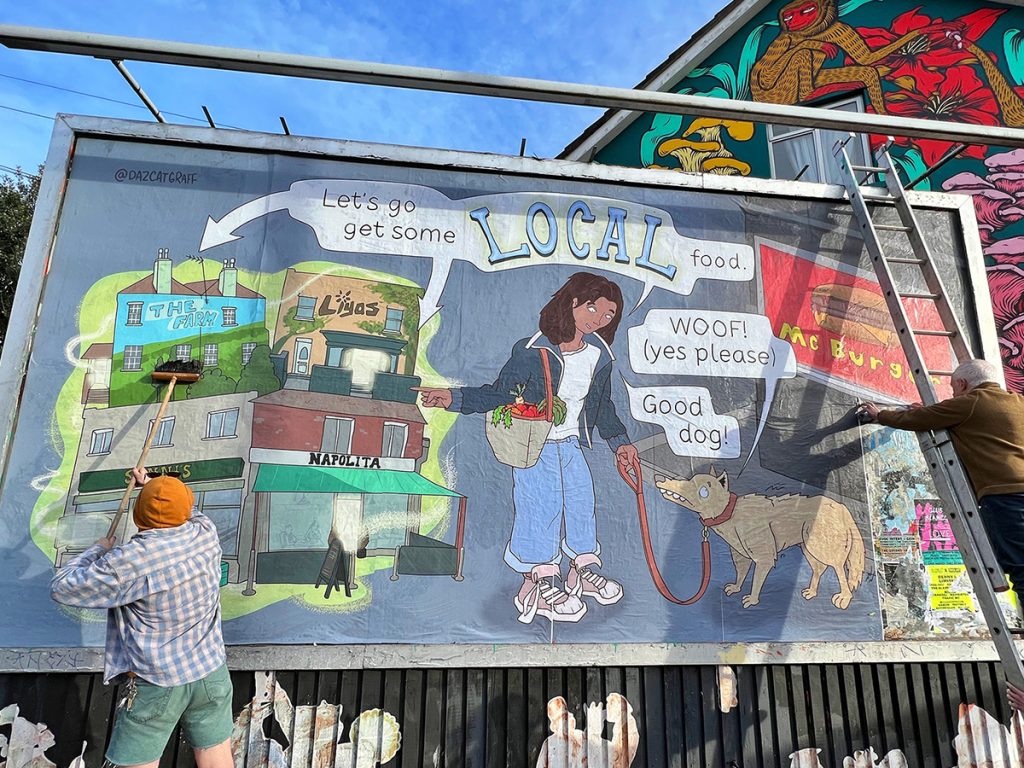
Artwork by DazCat
Subvertising
Subvertising is the practice of using corporate advertising spaces for non sanctioned adverts or artworks. It could be ad hacking – altering an existing advert. It could be imitating – as a satirical message, often attempting to undermine the adverts attempts to persuade us. Or it could be your very own artwork that is not concerned with advertising at all, to bring contrast to the streets, bringing original artwork without agenda to these corporate spaces. See Brandalism to learn more.
Can these be classed as vandalism?
Whilst most of the acts discussed are unsanctioned and could fit some people’s definitions of vandalism the fact is that any public art or intervention becomes political and will always be a source of contention. Without these innovators there would be no visual defiance against the status quo. Within public spaces there would only be the furnishings and visual aspects that have been curated for our consumption.
With the sharp rise in screen usage and sedentary lifestyles, children and grown ups alike can benefit from safe spaces to learn how to play, create and reconnect with their communities. The more we learn to depend on and give back to our communities the less we have to rely on large corporations to meet our needs. With the rising cost of living and massive cuts to public services, we need these public spaces to teach each other alternatives to paid activities, buying unsustainable products and eating poor quality produce. These visual, and more practical interventions, can support neighborhoods whether they simply brighten up the street or feed bellies.
For your consideration, a quote from Collin Ward – British anarchist writer.
“There is vandalism through stupidity, through neglect, through apathy, through greed, through meanness, through short-sightedness, through misconceived priorities or through sheer ignorance… the difficulty of course is that one man’s improvement is another man’s vandalism.” – Colin Ward (1973)

Published by