UPDATE: These planning applications will probably be discussed by the Reading Council Planning Committee at a meeting in December 2026 or January 2027 so there is still time to send in objections right up until the meeting. The more objections the council receive from local residents the better to show the strength of feeling from local people. Please share this widely and encourage others to object too!
Reading. A town with a substantial and interesting history. A university town, leading the way on climate research. That proudly puts the climate stripes on its bus fleet. A town that embraces change and is forward thinking.
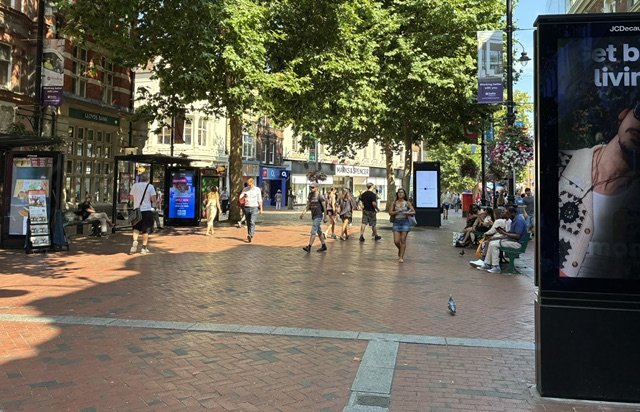
Unfortunately not all changes are welcome or positive. The proliferation of outdoor advertising in the town being one of them. Reading town centre has gradually become filled with digital advertising screens. From the huge screen blighting the station entrance to BT street hubs, you can’t walk anywhere in the town at any time of the day or night without being subjected to advertising from these things. Currently you can see at least six digital ad screens at any one moment while walking along Broad St.
Not satisfied with the current overwhelming level of digital advertising, planning applications have now been submitted to replace the static advertising on bus shelters around Reading town centre with double sided digital advertising screens. Also, to add digital screens to shelters that are currently free of advertising and to put in an additional two, free standing, digital screens.
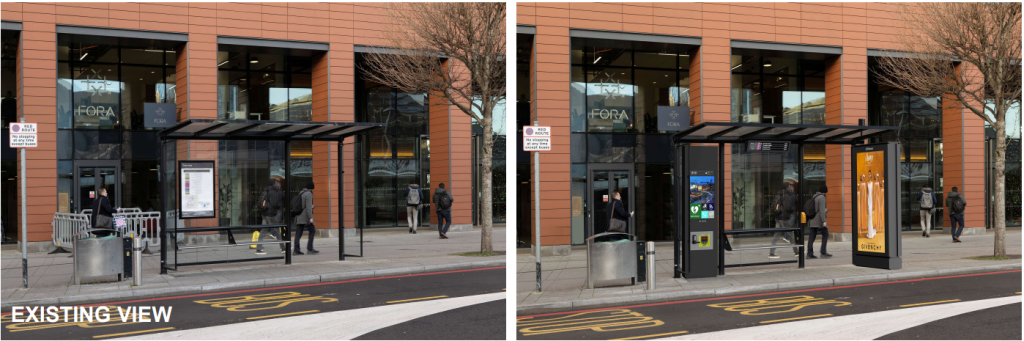
JCDecaux, the company who have just renewed their contract to maintain the Borough’s bus shelters, would like to make these changes to shelters around Broad St Mall, Friar St and Station Rd. (You can see the full application document from JCDecaux here.)
The area around the Mall is already saturated with advertising infrastructure. The massive digital ad screen over the entrance to the Mall dominates the area. Recently added BT street hubs add to the clutter on an already crowded and busy junction.
Outdoor advertising has an unavoidable impact on all of us. Please help to stop the further degradation of our town. It is easy to put in an objection but we need to act quickly. The planning application deadlines start from as early as 29th October 2026.
It is quick and simple to put your views forward, every objection counts. Please click on the links to the individual planning applications in the table below. This will take you to the planning application. Click on the ‘Comment’ button to add your objections.
| Application number | Location |
| PL/26/1137 | Pavement outside 21 Oxford Road |
| PL/26/1138 | Pavement outside 27 Oxford Road, bus stop screens |
| PL/26/1139 | Pavement outside 61 Friar Street |
| PL/26/1140 | Pavement outside 32-41 West Street |
| PL/26/1141 | Pavement outside 129 Friar Street |
| PL/26/1142 | Pavement outside 150 Friar Street |
| PL/26/1143 | Pavement outside 24A-24B Friar Street |
| PL/26/1150 | Pavement outside 37-41 Station Road |
| PL/26/1151 | Pavement outside 6-7 St.Mary’s Butts |
| PL/26/1203 | Pavement outside 160 Friar Street |
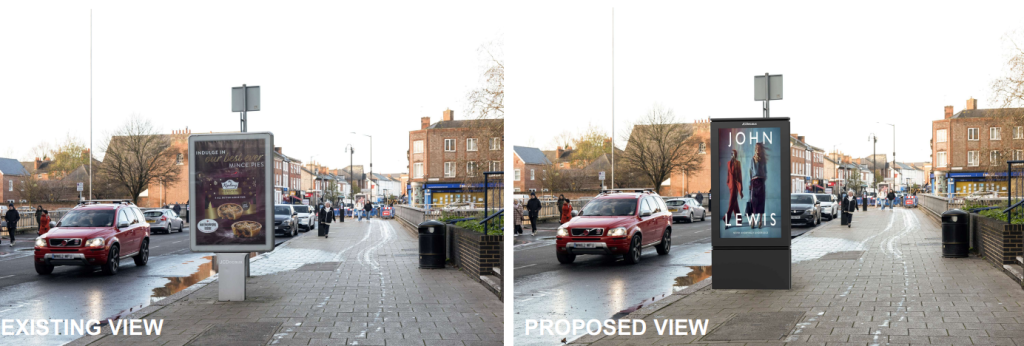
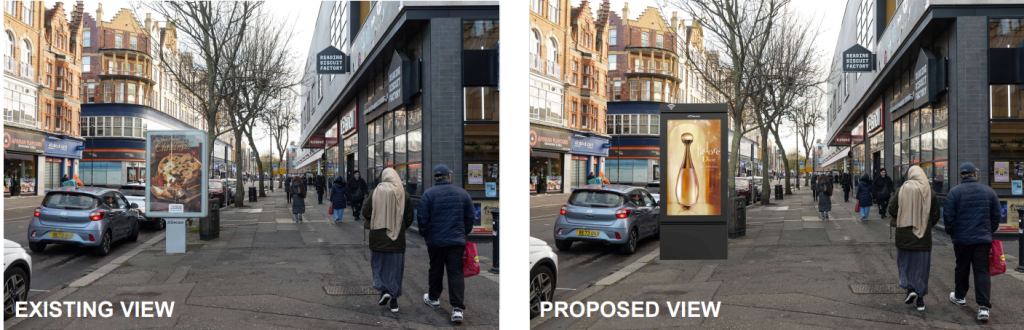
There are also two applications for new large pavement monoliths with digital advertising screens on each side replacing an existing paper ad site. These three metre high monoliths display up to six brightly-lit adverts per minute, create street clutter, obstruct sight lines and make walking harder, and are designed to catch the attention of drivers, creating a risk to road safety. They also produce light pollution and use large amounts of electricity unnecessarily. To object to these applications go to:
| PL/26/1144 | Pavement outside 58-60 Oxford Road |
| PL/26/1145 | Pavement outside 41 Oxford Road |
How to make an objection
- Go to the planning application website page
- Click on ‘comments’ to take you to a new page
- Click on the ‘comment’ box
- Fill in the form – you must include your name and why you are objecting but you don’t need to include your email address or home address unless you want to stay informed about the application
What to include in your objection
Your objections do not have to be long or technical. Here are some ideas for comments:
- Tell the Council why you don’t you want these new ad screens. How would it impact you? The cumulative effect of being exposed to so many advertising screens is detrimental to our health and mental wellbeing.
- The Planning Department can only refuse the screen on the grounds of ‘amenity’ and ‘public safety’, so be sure to mention these.
- Amenity: this could include the addition of a freestanding unit causing clutter in a busy pedestrianised area, the contribution to an area already saturated with advertising infrastructure, the addition of a visually dominating screen being a detriment to the area’s local character. It can also include how more advertising in this area will make you and your community feel about where you live and the pride you have in your neighbourhood.
- Human impact: Our most vulnerable citizens: elderly, young and disabled people, who use bus services the most, will be disproportionately affected by being exposed to so much unavoidable advertising.
- Outdoor advertising is heavily concentrated in lower-income, more polluted, and deprived areas of England and Wales, as reported by Adfree Cities in their ‘Unavoidable Impact’ research. Neighbouring Wokingham Borough has the least outdoor advertising in the UK.
- Public safety: would the billboard be by a busy junction? By a pedestrian crossing? The junction by Broad St Mall is very busy with buses, bikes and pedestrians and there are pedestrian crossings both here and along Friar St.
- Antisocial behaviour: Thames Valley Police have previously raised objections to digital screens because they interfere with security cameras and allow antisocial behaviour to go unchecked.
- You could also mention the impact these screens have on the environment. One small ad screen uses the same amount of electricity as up to 3 UK homes.
- Noise and heat from the screens cooling systems and light pollution from the LED display are detrimental to the climate and the wellbeing of people and wildlife.
- Reading Borough Council has declared a climate emergency and has pledged to make Reading a net zero carbon and climate-resilient town by 2030. Allowing these screens goes directly against this pledge.
- There is a known detrimental effect from digital advertising on neurodiverse people. In March 2023 The UCL Centre for Research in Autism and Education (CRAE) submitted written evidence to the UK Parliament Science and Technology Committee inquiry into the effects of artificial light and noise on human health. Section 4.3. stated, “In particular, digital advertising increases autistic people’s exposure to unwanted light and noise. A higher sensitivity to the world leads to thinking about the world as a more volatile place than the majority might. Flashing and moving digital adverts will be received as another confirmation of the unpredictability of the world. The expansion of digital advertising makes it difficult to escape from this barrage of stimuli – impacting on the ability of autistic people to engage in activities that bring joy and comfort.“
Please consider submitting objections and sharing this widely. Reading doesn’t need any more ads – and neither do we!
To get involved in Adblock Reading and Wokingham you can find out more and sign up to our email list here.

Published by